1911–1928
Wierzchownia and Cleveland
She was born on April 3, 1911, in Wierzchownia, a village in today’s Górzno district, then part of Russian-ruled Poland. She was the first child of Julian Walasiewicz and Weronika née Ucińska. She was baptised Stefania but never used that name. The thatched wooden house where she was born still stands at the edge of the village.
Her father went to America for work and found a job in a Cleveland steel mill. A year later he sent for his family: on June 13, 1912, Weronika and her baby daughter sailed from Bremen to Baltimore aboard the SS Chemnitz. The family settled in Cleveland’s Polish neighbourhood, now known as Slavic Village, and spoke only Polish at home. Two more daughters followed, Zofia (1914) and Klara (1919). At the Immaculate Heart of Mary parish school, teachers turned her name into Stella Walsh.
She spent whole days in Washington Park, running and playing volleyball, basketball and baseball. Someone at a baseball game noticed how fast she was and entered her in the city’s track meets. Her parents did not take it seriously; she later remembered her father burning the running shoes he found, and saving pennies to buy new ones.
In 1927 the Cleveland Press held a meet for schoolgirls billed as a search for future Olympians. Some 14,000 girls took part. Stella won the 50 yards in 6.0 seconds, equalling the US record, and seemed headed for the 1928 Amsterdam Olympics. On the entry form she honestly wrote her birthplace. She was not an American citizen and could not run for the United States.
She joined the only club nearby, the Polish Falcons. At the Falcons’ national meet in Syracuse in 1928, the seventeen-year-old won the 100 and 200 metres, the shot put and the discus. That year she also started work as a clerk for the New York Central Railroad in Cleveland, to help support her family.
1929–1931
First years in Polish colours
In the summer of 1929 she travelled to Poland with a Polish-American team for the Falcons’ international gathering at the National Exhibition in Poznań. She won the 60 and 100 metres, the relay and the long jump. Officials invited her to a coaching course at Kozłówka and persuaded her to join the Warsaw club Sokół-Grażyna. On July 28, 1929, in Królewska Huta, she ran for Poland for the first time, against Austria, and won four events. A month later, against Czechoslovakia, she set Polish records at 60, 100 and 200 metres. She also visited relatives in Pomerania she had hardly known.
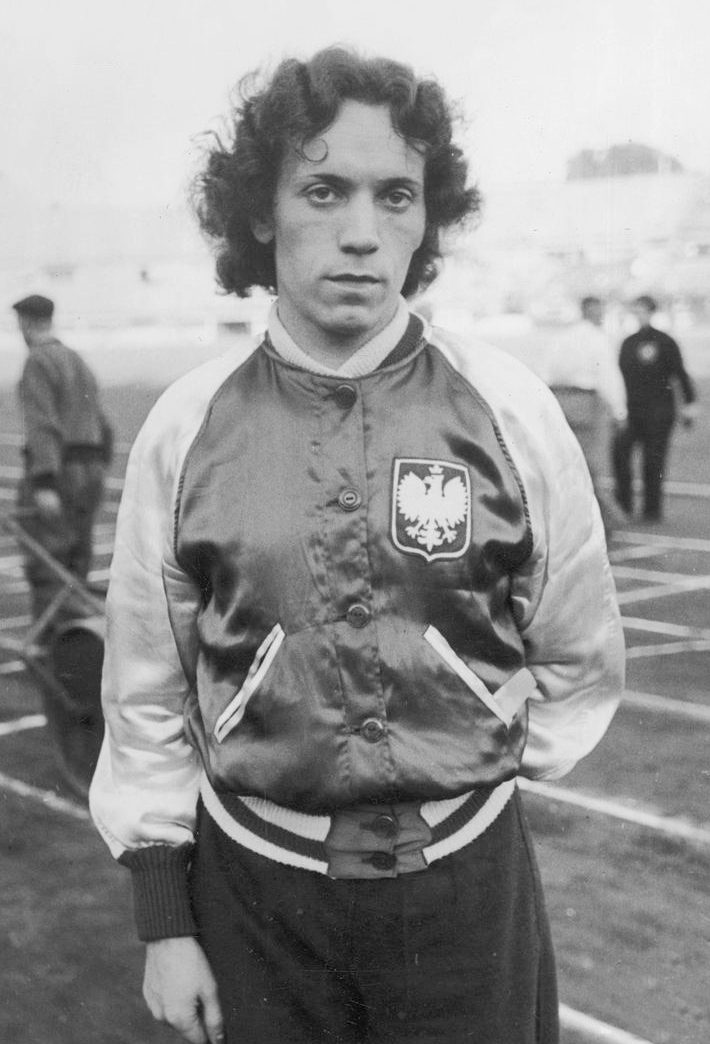
1930 made her a star. In May she became the first woman to run 100 yards in under 11 seconds (10.8), and at Madison Square Garden she set a world record for 50 yards. American papers called her the “Ohio Flash”. In September, at the Women’s World Games in Prague, she won the 60, 100 and 200 metres and was named best athlete of the Games. In Warsaw she beat Japan’s Kinue Hitomi in the sprints. She was voted Poland’s athlete of the year for the first time.
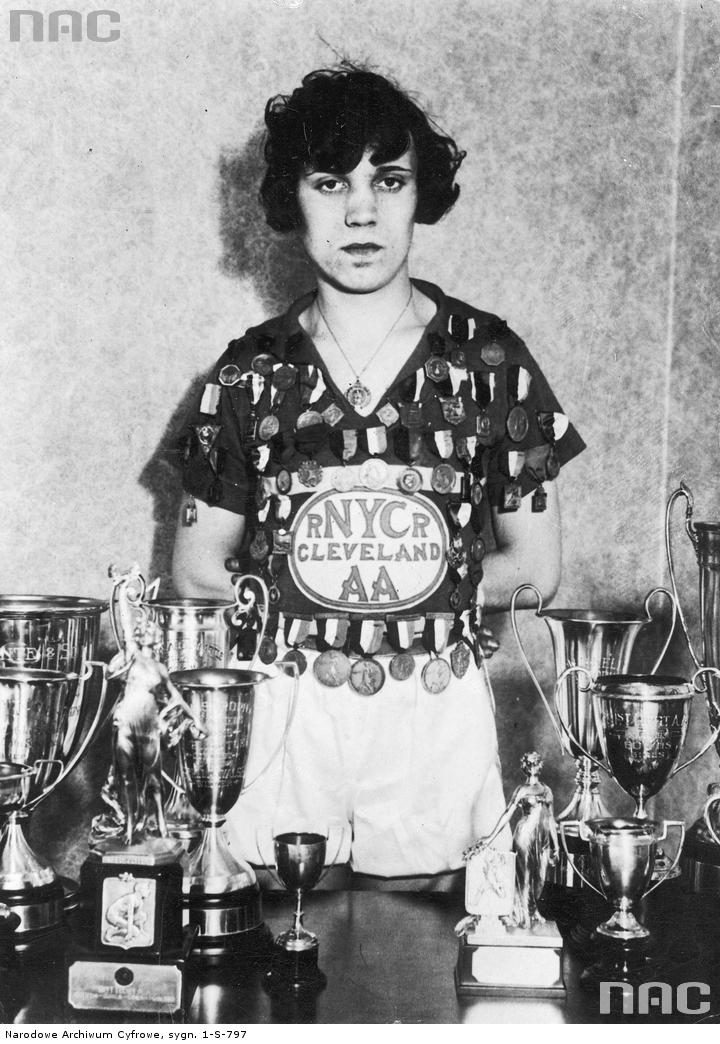
The journalist Kazimiera Muszałówna described her as quiet and reserved, someone who talked about herself like a chronicler: date, result, rivals. She smiled only at the finish line. She trained every day, kept strict hours and did not eat meat.
Cleveland welcomed her home with flowers at the station and a banquet at City Hall, and in 1931 gave her a De Vaux car. Her employer used her fame to advertise its trains. Tobacco companies offered her money to endorse cigarettes; she refused, as she had never smoked. In 1931 Poland awarded her the Silver Cross of Merit.
1932
Los Angeles
Before the 1932 Olympics, Americans wanted her on their team. Her pay was cut, then she lost her job. The Polish consulate in New York offered her work, and she chose to run for Poland. She told the Plain Dealer she would run for Poland because she was Polish, and that she would always think warmly of Cleveland.
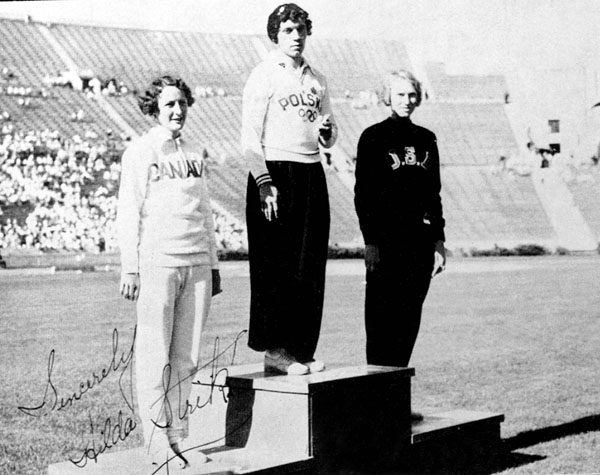
Part of the American press turned against her. On August 2, 1932, she won the Olympic 100 metres in 11.9 seconds, equalling the world record. The Przegląd Sportowy correspondent wrote that not a single person among the 20,000 in the stands applauded. She also placed sixth in the discus; the 200 metres and long jump were not yet Olympic events for women. Three weeks later in Chicago she set a world record at 200 metres (24.1).
In the autumn she sailed to Poland, bringing her car with her. Falcons delegates were among those waiting at Warsaw’s main station, and at a reception in the Hotel Angielski, Colonel Władysław Kiliński pinned the Gold Cross of Merit on her. With a scholarship from the Organisational Council of Poles Abroad, she spent the 1932–33 academic year at the Central Institute of Physical Education in Warsaw.
1933–1936
Records, travels, Berlin
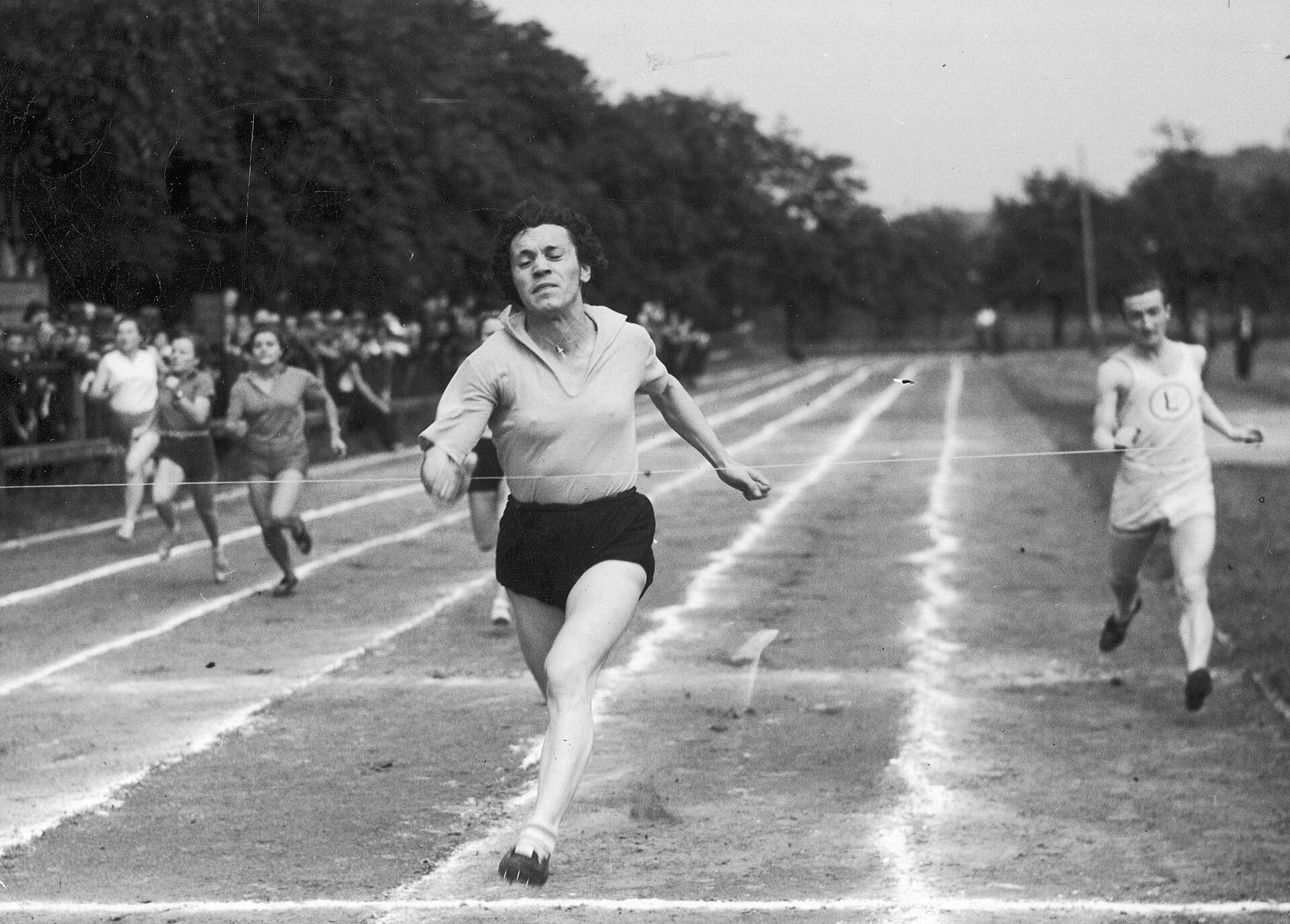
In January 1933 she fell on railway tracks at a training camp in Worochta and was not at full strength until mid-season. On March 17 she received the Grand Sports Honour Award, and on September 17 in Poznań she set world records at 60 and 100 metres (7.4 and 11.8). A week later in Lwów she lowered the 60 metres record to 7.3. She won the award again, this time to keep, and on October 17 President Ignacy Mościcki received her. That autumn she returned to America to train with Dr Daniel Griffin, who had prepared her for Los Angeles.
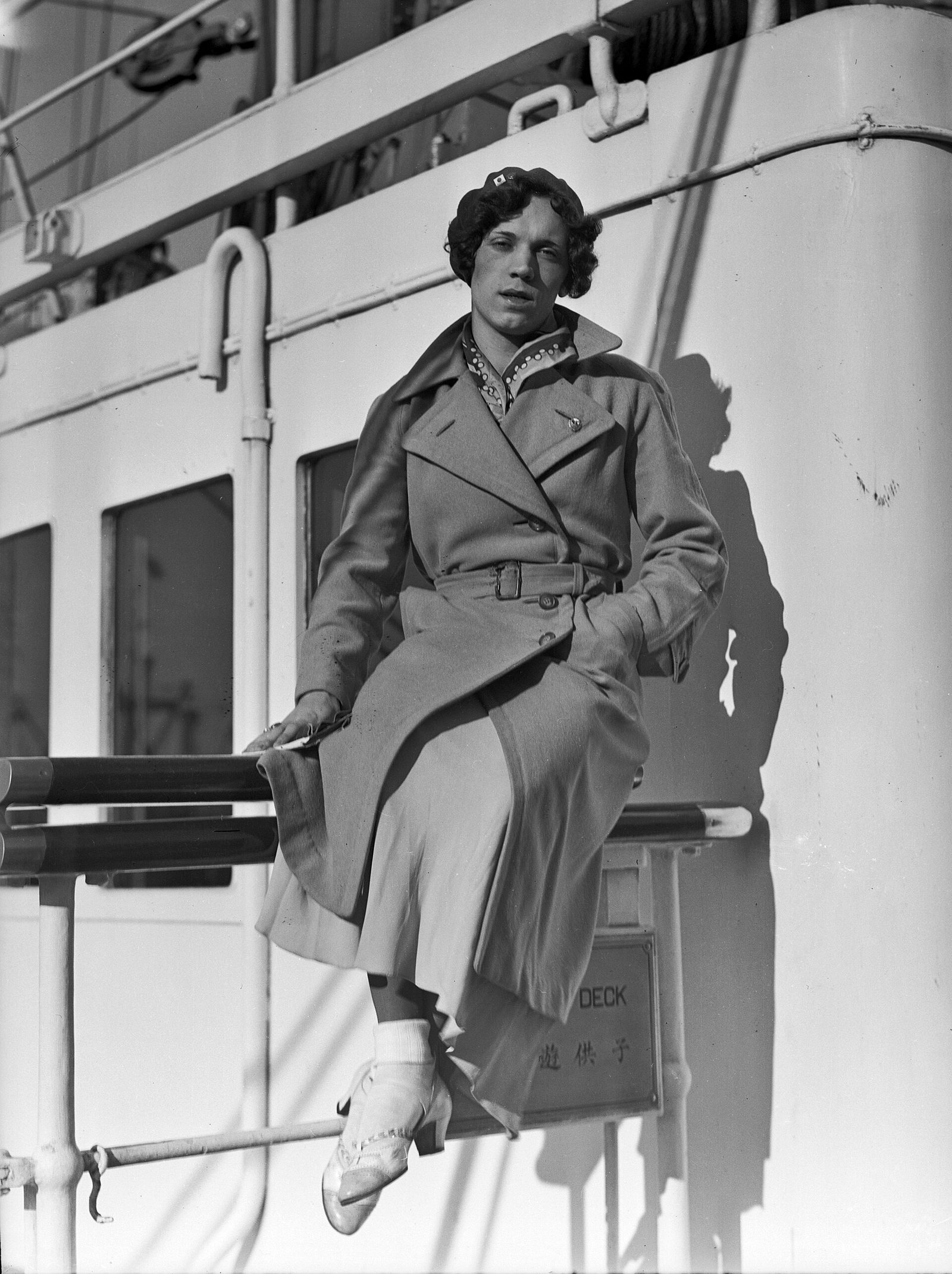
In 1934 she won gold at 60 metres and two silvers at the Women’s World Games in London, and four events at the first Games of Poles Abroad in Warsaw. In the autumn Japanese sports officials invited her to race in Osaka, Kyoto, Nagoya and Tokyo. She was the first foreign woman athlete to compete in Japan. On the way home she sent a newspaper a photograph from Java.
In February 1935 the Amateur Athletic Union suspended her for 30 days for playing in an amateur basketball game held before a professional match. Other players were not punished. The Polish consulate in Pittsburgh called it “glaring discrimination”, a punishment for choosing Poland in 1932. That summer she won three golds at the World University Games in Budapest.
She went to Berlin in 1936 as one of the favourites. The Polish press wrote about her constantly: the University of Warsaw Library alone holds more than 400 newspaper issues a year from 1934–1936 that mention her. Two days before the race she strained a thigh muscle. She ran the heats in pain and in the final on August 4 finished second (11.9) behind America’s Helen Stephens (11.5), ahead of both German runners. The two rivals later exchanged Christmas cards for years.
1937–1939
Vienna and the last pre-war years
After Berlin she struggled to find decent work in America; people said she had “sold herself for Polish gold”. She kept running. In 1937 she ran 100 metres in 11.6, the best time of her career, and founded a Polish women’s club in Cleveland with track and basketball teams. The basketball team won 56 games in a row.
Almost every summer she sailed to Poland. She ran in national championships and international matches, led training sessions in Gdynia and elsewhere, and visited family in Pomerania. A sports club in Czeladź was named after her. At the first European Championships for women, in Vienna in September 1938, she won the 100 and 200 metres and took silver in the long jump and the 4×100 metres relay.
In May 1939 in New York she posed beside a bust of her by the sculptor Olga Niewska, made for the Polish Pavilion at the World’s Fair. The sculpture never returned to Poland. Neither did she that year: the MS Batory’s sailings were cancelled one after another, and on the day the war began she was racing in America.
1939–1980
Cleveland
The war took two Olympic Games and a European Championships from her. On August 24, 1945, at an AAU district meet in Cleveland, she ran 100 metres in 11.1 seconds, faster than the world record of the time. The results were never sent for ratification, and the time stayed unofficial.
In 1946 she ran for Poland for the last time, winning seven events at the national championships and competing at the European Championships in Oslo. In December 1947 she became an American citizen (some sources link this to her 1956 marriage instead). In 1948 she founded a women’s club in the San Fernando Valley, and in 1951 the Helms Athletic Foundation named her the greatest woman athlete of the first half of the 20th century. That year, at 40, she won the last of about forty US titles, in the long jump.
She officially retired in 1956, the year of her brief marriage to former boxer Harry Neil Olson; she signed herself Stella Walsh Olson from then on. She worked in a plastics factory and later a brewery, and gave her free time to Polish-American clubs: the Falcons, Harmonia-Chopin, Polonia. In the 1970s she coached young runners at the Falcons in Cleveland; at 56 she still won a 60-yard dash.
In the 1960s and 1970s she often visited Poland as a coach and community organiser. She funded prizes for young athletes and supported the Polish Olympic Committee. On her last visit, in 1977, she gave her trophies to the Museum of Sport and Tourism in Warsaw. She was inducted into the National Polish-American Sports Hall of Fame in 1974, and into the National Track and Field Hall of Fame in 1975, at the same ceremony as Helen Stephens.
1980
Death and after
In the autumn of 1980 she chaired the Cleveland committee welcoming Poland’s women’s basketball team for a game against Kent State University. On the evening of December 4 she went to buy red-and-white ribbons for the Polish players’ medals. In the store parking lot she came upon two robbers. Investigators believed she fought back; she was shot and died in hospital that night, aged 69. More than 400 people attended her funeral Mass at Sacred Heart of Jesus church, and the Polish players carried the Polish flag ahead of her coffin. She was buried at Calvary Cemetery on December 9.
The autopsy required in a homicide showed that she was intersex: she had chromosomal mosaicism and underdeveloped male genitalia as well as female ones. Fragments of the report reached the press the day before her funeral, and some papers accused her of fraud. Coroner Samuel Gerber stressed that socially, culturally and legally she had been a woman for 69 years. Neither the IOC nor the IAAF ever stripped her of her medals or records.
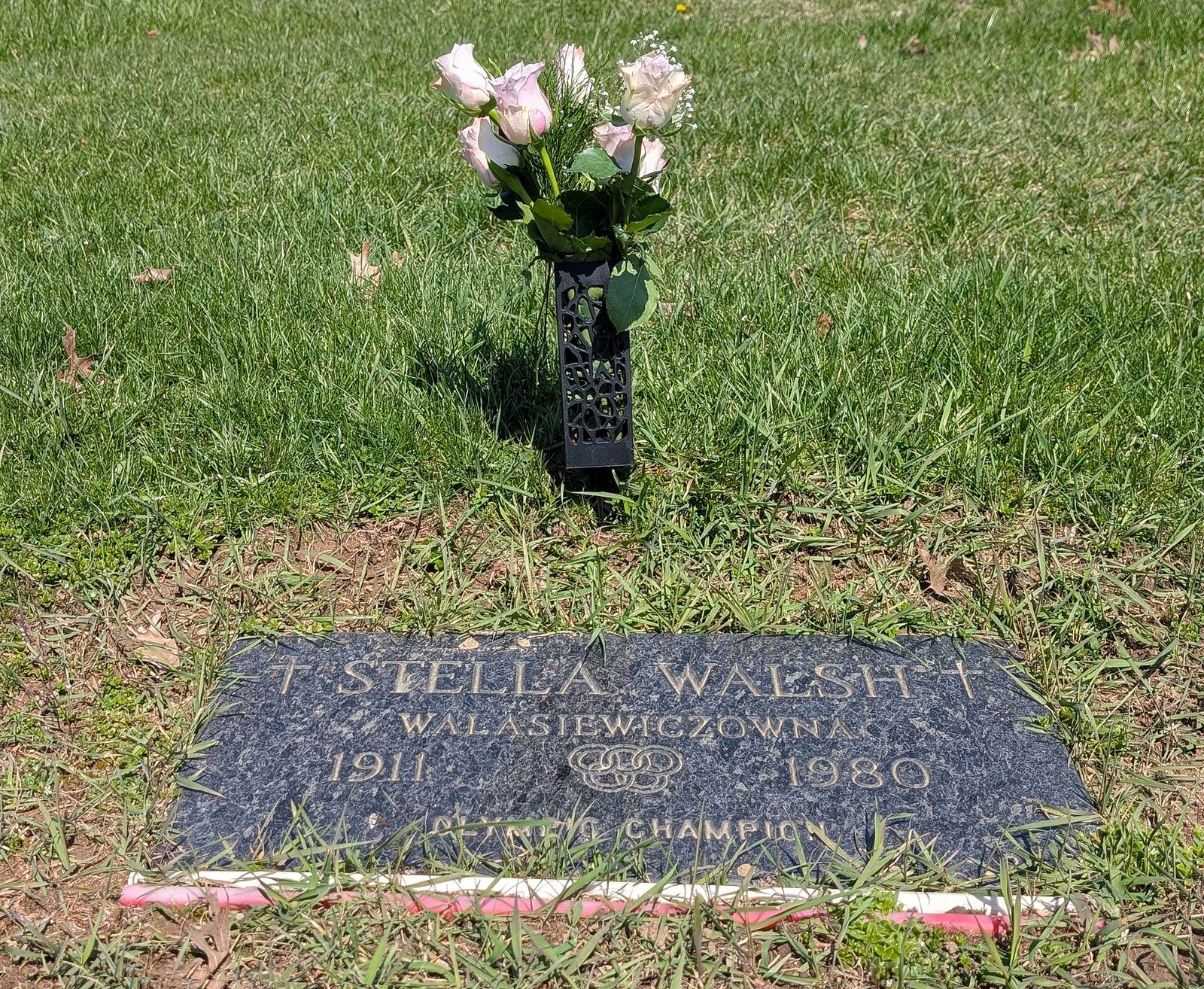
Today a recreation centre in Cleveland, a stadium in Rypin and streets in seven Polish towns bear her name. The Museum of Sport and Tourism told her story in a 2021–2022 exhibition, the Teatr Polski in Bydgoszcz staged a play about her, and since 2024 Wierzchownia has held a memorial run in her honour.
Sources
- Marzena Jaworska, Stanisława Walasiewicz. Fotograficzna opowieść najszybszej kobiety świata, Muzeum Sportu i Turystyki, Warszawa 2023
- Sheldon Anderson, The Forgotten Legacy of Stella Walsh: The Greatest Female Athlete of Her Time, Rowman & Littlefield, 2017
- Archiwum Akt Nowych, Konsulat Generalny RP w Nowym Jorku, sygn. 2/493/0/163 (1935–1938, 1944)
- Narodowe Archiwum Cyfrowe, Koncern Ilustrowany Kurier Codzienny – Archiwum Ilustracji (146 fotografii)
- Prasa polska 1929–1939 w zbiorach Biblioteki Uniwersytetu Warszawskiego (CRISPA): 2873 numery, m.in. „Przegląd Sportowy”, „Kurjer Warszawski”, „Express Poranny”, „Kurjer Czerwony”, „Goniec Warszawski”
- Olympedia; Encyclopedia of Cleveland History (Case Western Reserve University); USATF Hall of Fame; Wikipedia
- Lista pasażerów SS „Chemnitz”, 13.06.1912 (FamilySearch); spis ludności USA 1930